There is a specific magic to the Texas Roadhouse experience that goes beyond the rolls and cinnamon butter. While many visit for the steaks, the Texas Roadhouse style baked salmon is a hidden gem that captivates anyone looking for a perfectly moist, flaky, and flavor-forward seafood dinner.
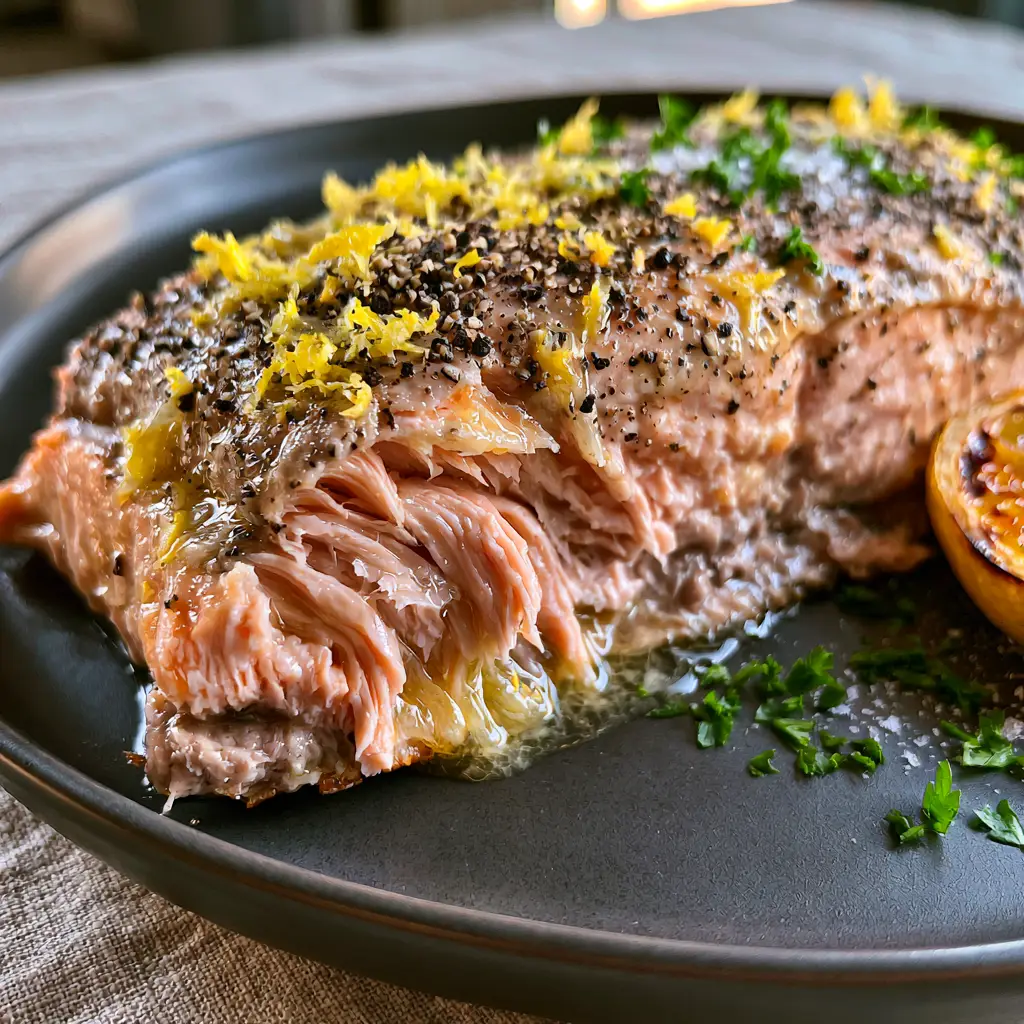
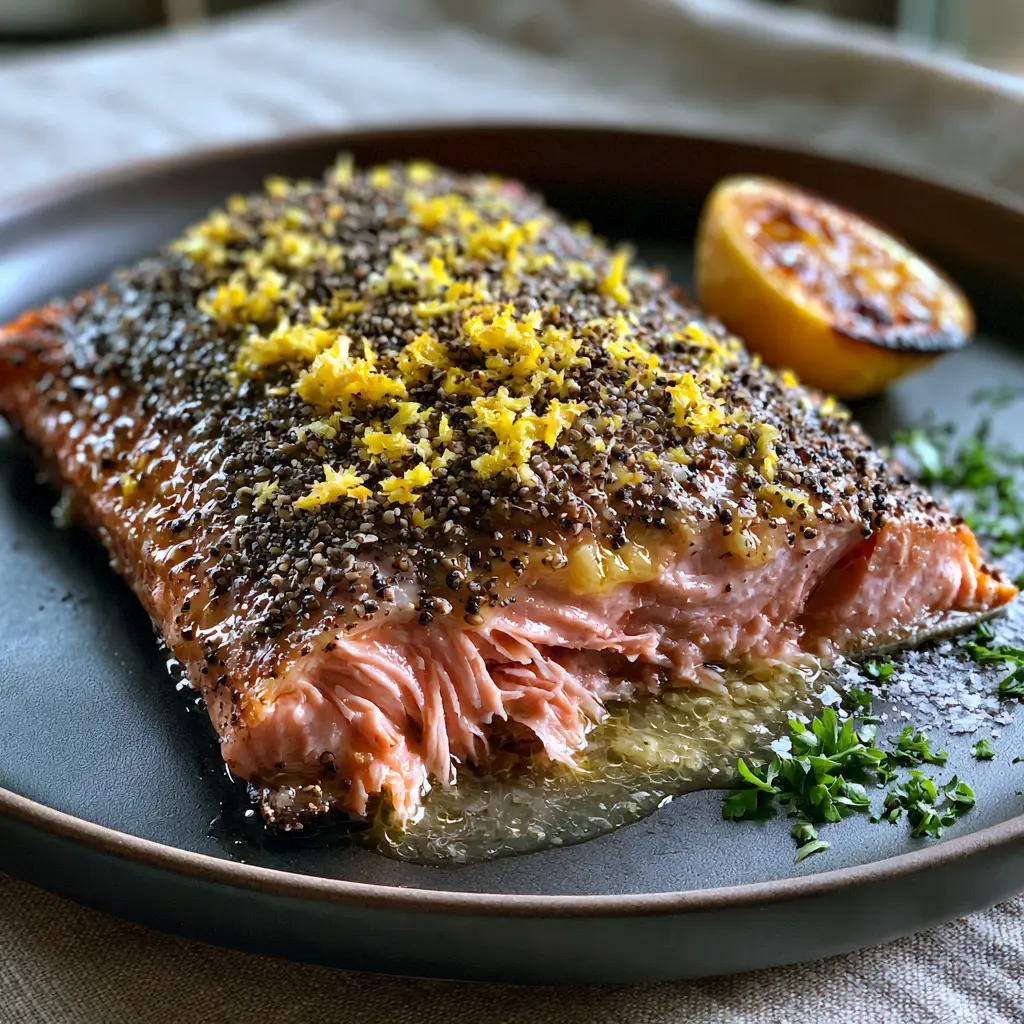
This recipe recreates that legendary dish by focusing on the forensic details of the original. Imagine a thick, center-cut Atlantic salmon fillet that pulls apart into juicy pink layers at the mere touch of a fork. It is not just about the fish, but the interplay of a pungent cracked black pepper crust and a glistening, translucent garlic butter glaze.
By following this guide, you will master the art of achieving that sun-drenched kitchen aesthetic right on your dining table. From the charred lemon half that adds a caramelized acidity to the finely minced parsley garnish, every element is designed to elevate your home cooking to restaurant-quality heights.
The Signature Appeal of This Peppery Atlantic Masterpiece
What sets the Texas Roadhouse style baked salmon apart from a standard weeknight fillet? It comes down to the structural integrity of the crust and the precise moisture retention of the meat. This recipe focuses on three distinct pillars of culinary excellence.
- Texture Contrast: The coarse sea salt and cracked black pepper create a tactile “snap” on the exterior that yields to a melt-in-your-mouth interior.
- Aromatic Depth: Fresh lemon zest is worked directly into the crust, releasing essential oils that cut through the richness of the Atlantic salmon.
- Visual Brilliance: A translucent garlic butter glaze provides a professional sheen while pooling slightly at the base, ensuring every bite is lubricated and savory.
- The Char Factor: We don’t just serve lemon; we sear it until the sugars caramelize, providing a deep, smoky citrus note that brightens the entire plate.
The Anatomy of Ingredients for Texas Roadhouse Style Baked Salmon
To achieve the visual and flavor profile of the Texas Roadhouse style baked salmon, you must select high-quality components. While the fish is the star, the supporting cast provides the necessary “restaurant” finish.
Center-Cut Atlantic Salmon Fillets: You need fillets that are at least 1.5 inches (3.8cm) thick. This thickness allows for a beautiful sear without overcooking the center, maintaining those “juicy pink layers” seen in the blueprint.
Coarse Cracked Black Peppercorns: Do not use pre-ground pepper here. You want large, jagged pieces of peppercorn to provide a spicy crunch and a visual “crust” that defines the Texas Roadhouse style.
Unsalted Butter (45g / 3 tbsp): This serves as the base for our translucent glaze. We use unsalted to control the sodium levels, allowing the coarse sea salt garnish to do the heavy lifting at the end.
Fresh Lemon Zest and Juice: The zest provides the bright yellow pop on top of the fish, while the charred lemon half provides the concentrated acidity needed to balance the fat of the salmon.
Fresh Garlic (2 cloves, minced): The garlic is gently infused into the butter at a low temperature to remain translucent rather than browned, ensuring it doesn’t mask the natural color of the glaze.
Finely Minced Parsley: This adds the final touch of vibrant green. It should be minced so finely that it looks like emerald dust over the glistening glaze.
Avocado Oil (15ml / 1 tbsp): This foundational “invisible” ingredient is crucial. Its high smoke point allows us to sear the skin to a crisp without the oil breaking down or smoking out your kitchen.
Essential Gear for the Perfect Restaurant Sear
To recreate the Texas Roadhouse style baked salmon, your equipment must handle high heat and provide even distribution. This is a hybrid cooking method that requires a smooth transition from the stovetop to the oven.
A heavy-bottomed cast iron or stainless steel skillet is non-negotiable. These materials hold heat exceptionally well, which is vital for achieving that initial sear that locks in moisture. You will also need a microplane for the lemon zest and a mortar and pestle (or a heavy pan) to crack the peppercorns into large, coarse fragments.
Finally, an instant-read meat thermometer is your best friend. To achieve the “perfectly flaky” texture described in our visual blueprint, you must pull the salmon from the heat at exactly 125°F (52°C) for a medium finish, as carry-over cooking will bring it to the ideal 130°F (54°C).
Architecting the Texas Roadhouse Style Baked Salmon: Step-by-Step
Phase 1: Preparing the Peppery Armor
Begin by patting your salmon fillets completely dry with paper towels. This is the most important step for a professional sear; moisture is the enemy of a crust. Season the flesh side generously with coarse sea salt and the cracked black pepper, pressing the peppercorns into the meat so they adhere.
In a small bowl, combine the lemon zest with a pinch of salt. Set this aside to let the salt draw out the citrus oils. This mixture will be applied at the very end to maintain its bright yellow color and fresh aroma.
Phase 2: The High-Heat Sear and Oven Finish
Heat your avocado oil in the skillet over medium-high heat until it just begins to shimmer. Place the salmon fillets skin-side down first. Listen for a vigorous sizzle—this is the sound of the skin dehydrating and crisping. Sear for 3-4 minutes until the skin is golden and releases easily from the pan.
Carefully flip the fillets and immediately transfer the entire skillet into a preheated oven at 400°F (200°C). Roast for 5-7 minutes. Look for the visual cue of the “layers pulling apart” near the edges of the fillet. This indicates the connective collagen has begun to melt, signifying perfect flakiness.
Phase 3: The Translucent Garlic Butter Infusion
While the salmon is in the oven, melt your butter in a small saucepan over low heat. Add the minced garlic. The goal is to soften the garlic until fragrant without letting it turn brown. We want a “glistening, translucent” glaze. Once the butter is infused, remove it from the heat and stir in half of the minced parsley.
Phase 4: Charring the Citrus
In a separate small, dry skillet over high heat, place your lemon halves cut-side down. Leave them undisturbed for 2-3 minutes. You are looking for a deep, caramelized brown on the surface of the lemon. This not only looks spectacular on a matte dark plate but also sweetens the juice significantly.
Expert Culinary Tips for Flawless Results
- The Skin Trick: If you enjoy crispy skin, don’t pour the glaze over it. Spoon the butter only onto the flesh side to keep the bottom “cracker-dry.”
- Avoid the White Stuff: That white substance that sometimes seeps out of salmon is called albumin. To minimize it, avoid overcooking and let the salmon come to room temperature for 15 minutes before cooking.
- Peppercorn Variety: For a more complex “Roadhouse” flavor, use a blend of black and white peppercorns. The white pepper adds an earthy heat that complements the sharp bite of the black.
- The Resting Period: Let the salmon rest for 3 minutes after it comes out of the oven. This allows the juices to redistribute, ensuring that “juicy pink meat” aesthetic when you finally break into it.
Elevating Your Meal: Pairing and Serving Suggestions
The richness of the Texas Roadhouse style baked salmon demands sides that offer either a crisp crunch or a creamy contrast. To keep things light and vibrant, I highly recommend serving this alongside a refreshing cucumber salad, which provides a cooling acidity that cuts through the garlic butter.
If you are looking to create a complete high-protein dinner, consider pairing the salmon with some sautéed greens or a side of wild rice. For those who enjoy the flavors of this glaze, you might also find inspiration in our classic lemon garlic butter salmon recipe for a slightly different take on the citrus-butter profile.
For a true steakhouse-at-home experience, start the meal with a batch of savory ranch mushrooms. The earthy tones of the mushrooms create a wonderful preamble to the bright, peppery salmon.
Frequently Asked Questions
Yes, you can air fry at 380°F (190°C) for 8-10 minutes, but you will miss out on the deep sear provided by a cast iron skillet.
Use a thermometer to check the thickest part of the fillet; pull it out at 125°F (52°C). Visually, the meat should be opaque and begin to flake when pressed with a fork.
Store in an airtight container for up to 2 days. Reheat gently in a 275°F (135°C) oven with a splash of water or extra butter to prevent it from drying out.
Atlantic salmon is preferred because of its higher fat content, which creates the juicy, pulling-apart layers and rich flavor found in the restaurant version.
That white substance is albumin, a protein that pushes out when the muscle fibers contract too quickly. To prevent it, do not overcook the fish and let it sit at room temperature before baking.
The Ultimate Texas Roadhouse Style Baked Salmon Recipe
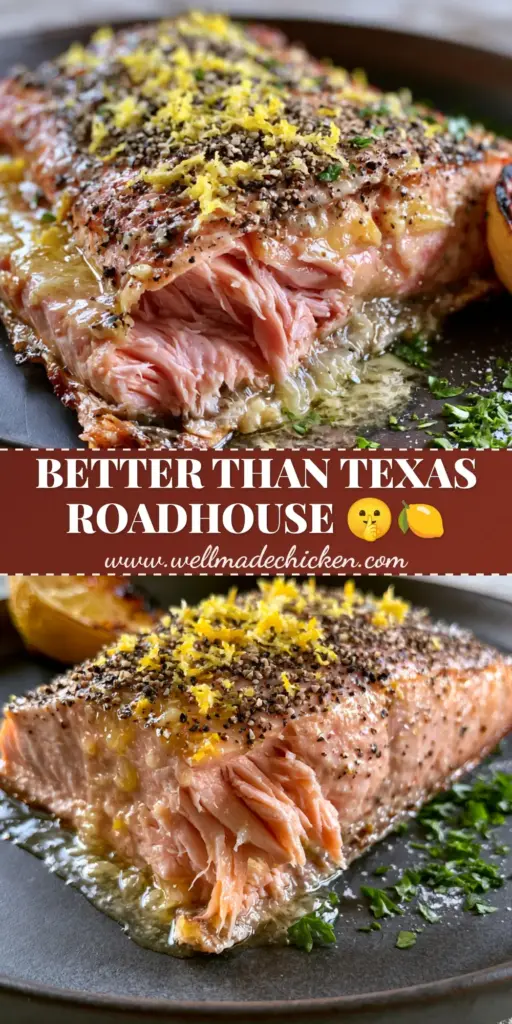
Texas Roadhouse Style Baked Salmon with Cracked Pepper and Garlic Butter
Ingredients
Equipment
Method
- Pat salmon fillets dry with paper towels. Season the flesh side with coarse sea salt and cracked peppercorns, pressing firmly to adhere.
- Melt butter in a small pan over low heat; add minced garlic and cook for 2 minutes until fragrant but translucent.
- Heat oil in an oven-safe skillet over medium-high heat. Place salmon skin-side down and sear for 3-4 minutes until crispy.
- Flip the salmon and place the skillet in a 400°F (200°C) oven for 5-7 minutes until the internal temperature reaches 125°F (52°C).
- Place lemon halves cut-side down in a hot dry skillet for 2-3 minutes until caramelized and blackened.
- Spoon the garlic butter glaze over the salmon. Top with lemon zest, fresh parsley, and a final dusting of sea salt. Serve with the charred lemon half.
Notes
Use a matte dark plate to make the pink and yellow colors pop for a restaurant-style presentation.
Final Thoughts on This Restaurant Classic
Mastering the Texas Roadhouse style baked salmon is a milestone for any home cook. It combines the technical skills of pan-searing and oven-roasting with the delicate art of flavor infusion. The result is a dish that is as visually stunning on a matte dark plate as it is delicious to eat.
We would love to see how your salmon turned out! Did you achieve that perfect peppercorn crust? Let us know in the comments below or tag us in your photos. For more kitchen inspiration and restaurant-style secrets, be sure to sign up for our newsletter and follow us on Pinterest.