This beef stew is the absolute pinnacle of cold-weather comfort food, designed specifically for those who crave a rich, restaurant-quality finish at home. If you have been searching for a recipe that delivers tender chunks of seared beef and a dark, glossy gravy that clings to every vegetable, you have found it. Unlike watery versions, this version utilizes professional searing techniques and a navy blue enameled Dutch oven to maximize heat retention and flavor development.
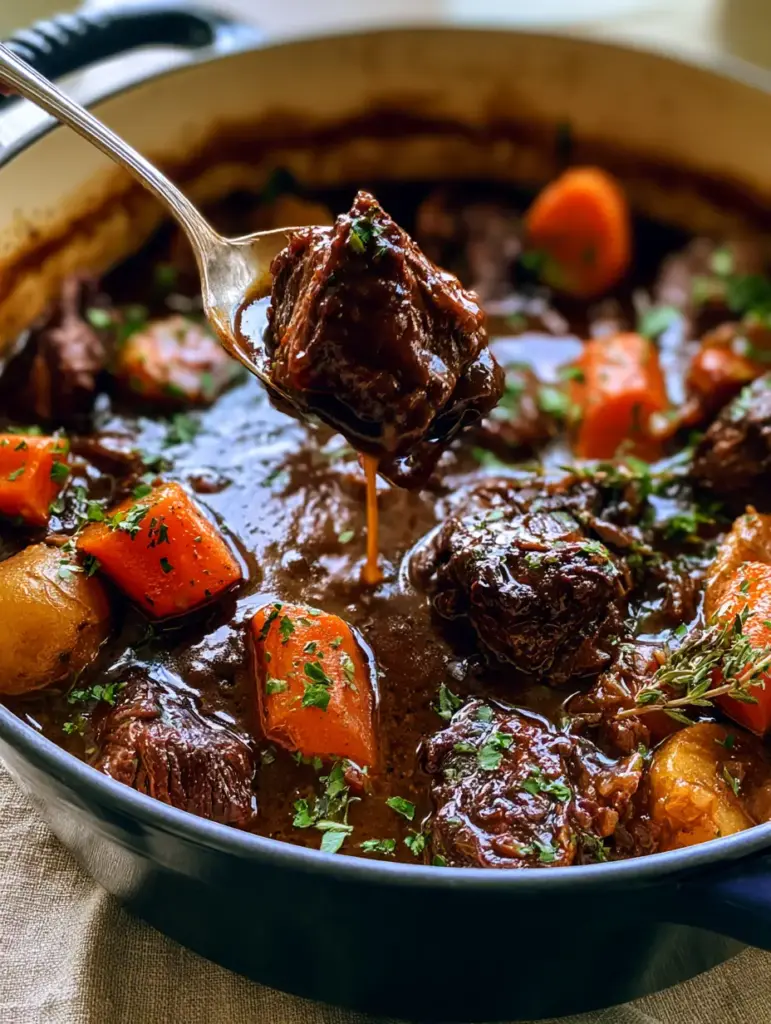
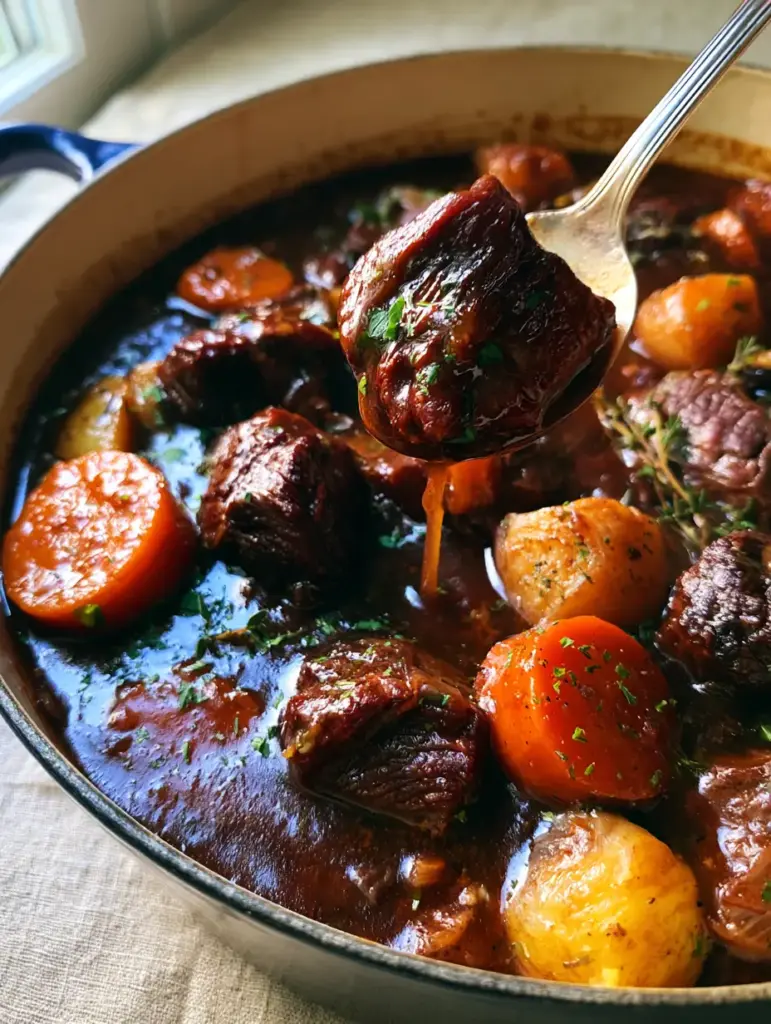
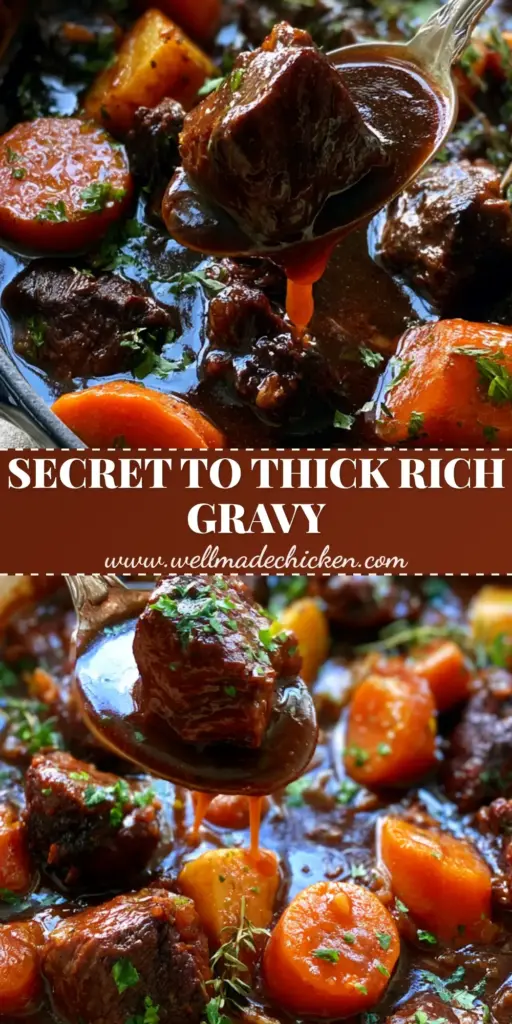
When you lift the lid of your navy blue enameled Dutch oven, the first thing you will notice is the steam rising in fragrant clouds, carrying the scent of fresh thyme and red wine. The visual appeal of this dish is undeniable: vibrant orange thick-cut carrot coins and rustic golden potato chunks nestled in a sauce so dark and viscous it looks like liquid velvet. This is the beef stew that wins cooking competitions and becomes a family legacy.
Why This Savory Beef Stew Strategy Works
- Ultra-Glossy Texture: We use a specific deglazing technique to ensure the gravy is thick and reflective, just like the professional food photography you see on Pinterest.
- Layered Aromatics: The addition of pearl onions provides a pop of sweetness that balances the deep, savory notes of the seared beef.
- Scientific Searing: By focusing on the Maillard reaction, we create a deep-brown crust on the meat that infuses the entire pot with umami.
- Herb Infusion: Using both fresh thyme sprigs and chopped fresh parsley adds layers of brightness to the heavy, rich base.
If you enjoy hearty, bowl-based meals, you might also love our Lebanese beef stew for a Mediterranean twist, or perhaps a lighter cabbage roll soup for weeknight ease. But for today, we are going all-in on the classic, thick-gravy tradition.
The Essential Components for a Glossy Beef Stew
Success in the kitchen begins with understanding your ingredients. Each element in this beef stew serves a structural or flavorful purpose. Do not skip the searing process, as this is where the “dark” color of your gravy is born.
Beef Chuck Roast: You will need 3 pounds (1.36kg) of high-quality chuck roast. This cut is marbled with fat and connective tissue, which breaks down into gelatin, creating that thick, glossy gravy Pinterest users love.
The Fat: Use 3 tablespoons (45ml) of high-smoke point oil (like avocado or grapeseed) for the initial sear. Butter is added later for a “monter au beurre” finish to give the sauce its shine.
Aromatic Base: 1 cup (150g) of pearl onions and 4 cloves of minced garlic. Pearl onions are superior to diced onions here because they remain whole, providing a beautiful visual contrast in the navy blue pot.
Root Vegetables: 4 large carrots (300g) sliced into thick coins and 1.5 pounds (680g) of Yukon Gold potatoes cut into 1-inch cubes. These hold their shape better than Russets and contribute to the “rustic golden” look.
Liquid Gold: 2 cups (480ml) of dry red wine (Cabernet or Merlot) and 3 cups (720ml) of high-quality beef bone broth. The wine acidity cuts through the fat, while the broth provides the base for the viscous sauce.
Fresh Herbs: 6 sprigs of fresh thyme and a handful of fresh parsley. The thyme simmers with the meat, while the parsley is added at the end for that “fine flake” garnish seen in the visual blueprint.
Mastering the Sear: Step-by-Step Instructions
Preparing the Beef for Maximum Umami
Start by patting your beef chunks completely dry with paper towels. This is a non-negotiable step. If the meat is wet, it will steam rather than sear, and you will miss out on the seared deep-brown beef finish.
Season the beef generously with 2 teaspoons (12g) of kosher salt and 1 teaspoon (5g) of cracked black pepper. Dredge the pieces lightly in 1/4 cup (30g) of all-purpose flour, shaking off the excess. This flour will eventually act as the thickener for your dark brown glossy gravy.
The Dutch Oven Browning Process
Heat your navy blue enameled Dutch oven over medium-high heat. Add the oil and wait until it shimmers. Working in batches to avoid overcrowding, add the beef. You want to hear a loud sizzle the moment the meat hits the metal.
Leave the beef undisturbed for 3-4 minutes per side. You are looking for a deep-brown crust. Once seared, remove the meat to a plate. The bottom of your pot should be covered in “fond”—those delicious brown bits that are the secret to a professional beef stew.
Deglazing and Building the Glossy Gravy
Reduce the heat to medium and add the pearl onions. Sauté for 5 minutes until they begin to soften. Pour in the red wine and use a wooden spoon to scrape every bit of fond off the bottom of the pot. This is the moment the sauce begins to turn that iconic exceptionally dark color.
Return the beef and any accumulated juices to the pot. Add the beef broth, thyme sprigs, and a tablespoon of tomato paste for extra depth. The liquid should just cover the meat. Bring to a gentle simmer—never a rolling boil—to ensure the meat remains fork-tender.
If you’re looking for side dish inspiration while this simmers, consider these crispy potato stacks or browse our meatless dinner recipes for your next meal prep session.
Adding the Hearty Vegetables
After the beef has simmered for 90 minutes, it is time to add the thick-cut carrot coins and rustic golden potato chunks. By adding them later, we ensure they are tender but not mushy, maintaining the visual recipe blueprint of distinct, vibrant shapes.
Submerge the vegetables into the viscous gravy. Cover the Dutch oven and continue simmering for another 45-60 minutes. You will know it is done when a silver spoon can glide through a chunk of beef with zero resistance.
Expert Tips for Success
- The Spoon Test: Lift a piece of meat with a silver spoon. The thick gravy should drip slowly and visibly cling to the meat. If it is too thin, simmer uncovered for the last 15 minutes.
- Don’t Skip the Wine: The tannins in red wine help break down the tough fibers in the beef chuck, ensuring that “fork-tender” result.
- Pearl Onion Hack: If using fresh pearl onions, blanch them in boiling water for 30 seconds to make peeling them a breeze.
- Temperature Control: If the stew boils too hard, the muscle fibers in the beef will tighten and become stringy. Keep the bubbles small and lazy.
- Garnish Like a Pro: Always add the fine flakes of fresh green parsley at the very last second to maintain the vibrant contrast against the dark sauce.
Storing, Reheating & Freezing
This beef stew actually tastes better the next day as the flavors continue to marry in the fridge. Store it in an airtight container for up to 4 days. When reheating, do so gently on the stovetop over low heat, adding a splash of broth if the glossy gravy has thickened too much.
To freeze, allow the stew to cool completely. Place in freezer-safe bags or containers for up to 3 months. Thaw overnight in the refrigerator before reheating. Note that potatoes can sometimes change texture slightly after freezing, but the flavor remains elite.
What to Serve With This Hearty Dish
While this is a complete meal in a pot, you can elevate the experience by serving it alongside crusty sourdough bread to soak up every drop of the viscous sauce. For a lighter pairing, a crisp green salad with a lemon vinaigrette provides a nice acidic balance to the richness of the seared beef chunks.
If you are hosting a larger gathering, consider starting with a warm homemade chicken soup or serving the stew as the main event following a selection of Mediterranean appetizers.
Frequently Asked Questions
Yes, but you must sear the beef and deglaze the pan with wine on the stovetop first. Transfer everything to the slow cooker and cook on low for 7-8 hours, adding the vegetables in the last 2 hours.
The secret is a two-step process: first, achieve a deep-brown sear on the flour-dredged meat to create ‘fond,’ and second, deglaze the pot with red wine. This combination builds deep color and reflective viscosity.
Beef chuck roast is the gold standard. It contains the perfect amount of connective tissue and fat, which melts down during a low-and-slow simmer to create a tender texture and a naturally thick, glossy gravy.
Vegetables often turn mushy if added too early. To keep carrots and potatoes rustic and firm, add them during the final 45-60 minutes of cooking rather than simmering them for the full three hours.
The Ultimate Navy Blue Dutch Oven Beef Stew Recipe
Ready to create the most photographed beef stew on Pinterest? Follow the precise measurements below to achieve that perfect dark gloss and tender meat every single time.
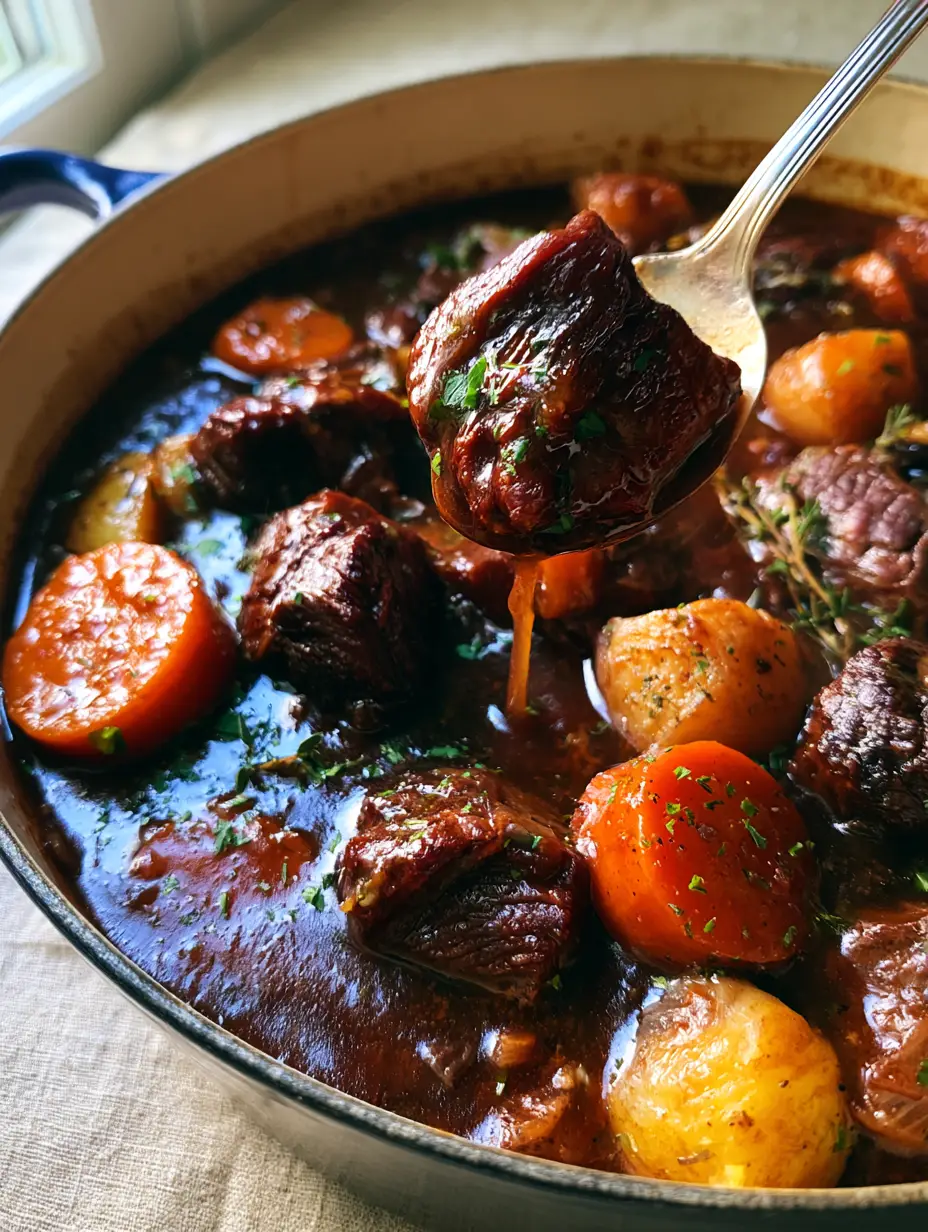
Beef Stew with Red Wine, Pearl Onions, and Glossy Root Vegetables
Ingredients
Equipment
Method
- Season beef with salt and pepper, dredge in flour, and sear in the navy blue Dutch oven until a deep-brown crust forms.
- Remove beef, sauté pearl onions, then pour in red wine, scraping the bottom to release the brown bits for the dark gravy.
- Add beef broth and thyme, return beef to pot, and simmer covered for 90 minutes until meat is becoming tender.
- Incorporate carrots and potatoes. Simmer for another 45-60 minutes until the gravy is glossy and vegetables are fork-tender.
Notes
Use a navy blue enameled pot to ensure even heat and beautiful presentation.
Share Your Culinary Masterpiece!
We want to see your beef stew creations! Did your gravy turn out perfectly glossy? Did you use a navy blue enameled Dutch oven like ours? Save this recipe to your “Comfort Food” board on Pinterest and follow flavorvale_official for more high-end home cooking inspiration.
Please leave a 5-star rating in the comments below and upload a photo of your stew. Seeing your steam rising from the pot makes our day! Don’t forget to tag us so we can share your hard work with the community.