The French 75 cocktail is more than just a drink; it is a storied piece of liquid history that perfectly balances the botanical bite of gin with the elegant effervescence of fine champagne. Named after the powerful 75mm French field gun used during World War I, this cocktail is known for having a “kick” that feels like being shelled with luxury.
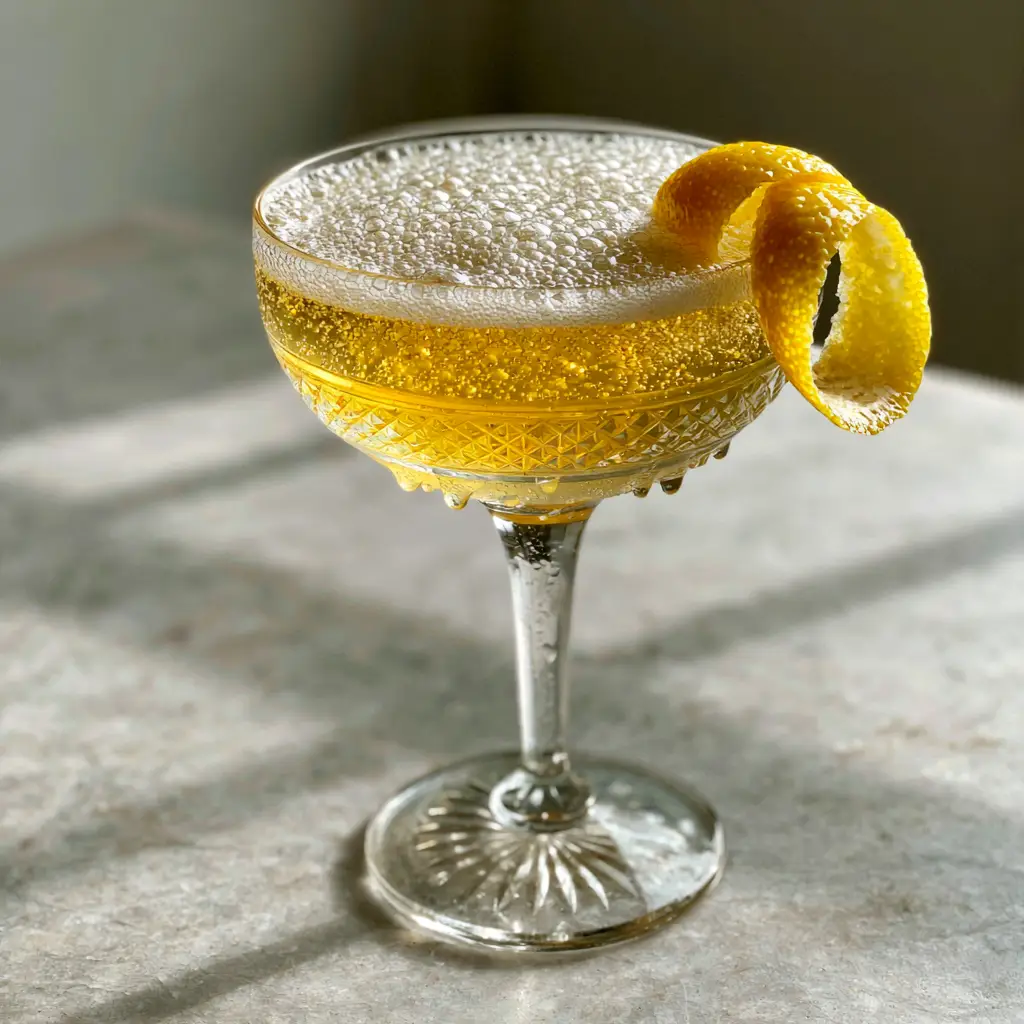
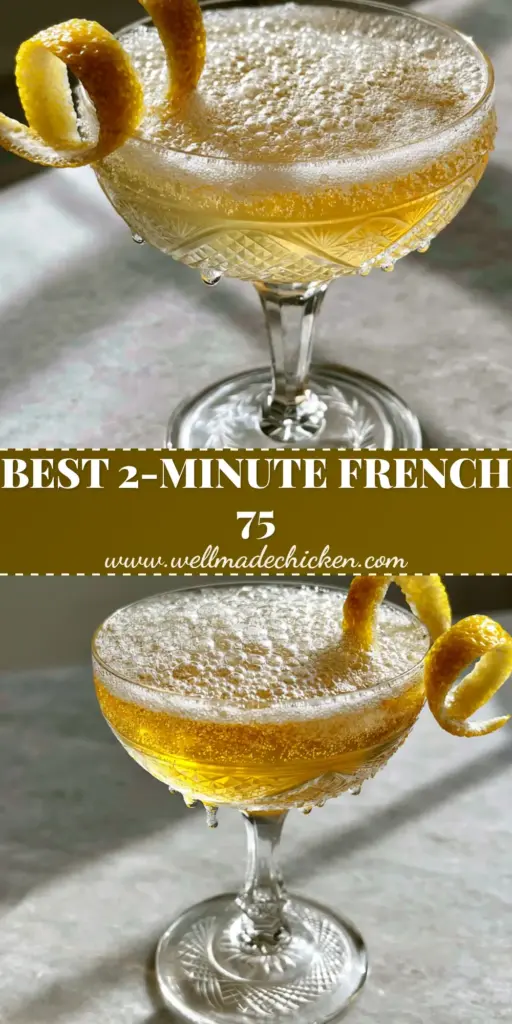
When you hold a French 75 cocktail in a vintage etched crystal coupe, you aren’t just holding a beverage; you are holding an experience. The visual appeal of this drink—with its distinct golden-yellow base and thick, rising champagne foam—evokes the timeless aesthetic of a sun-drenched Parisian cafe.
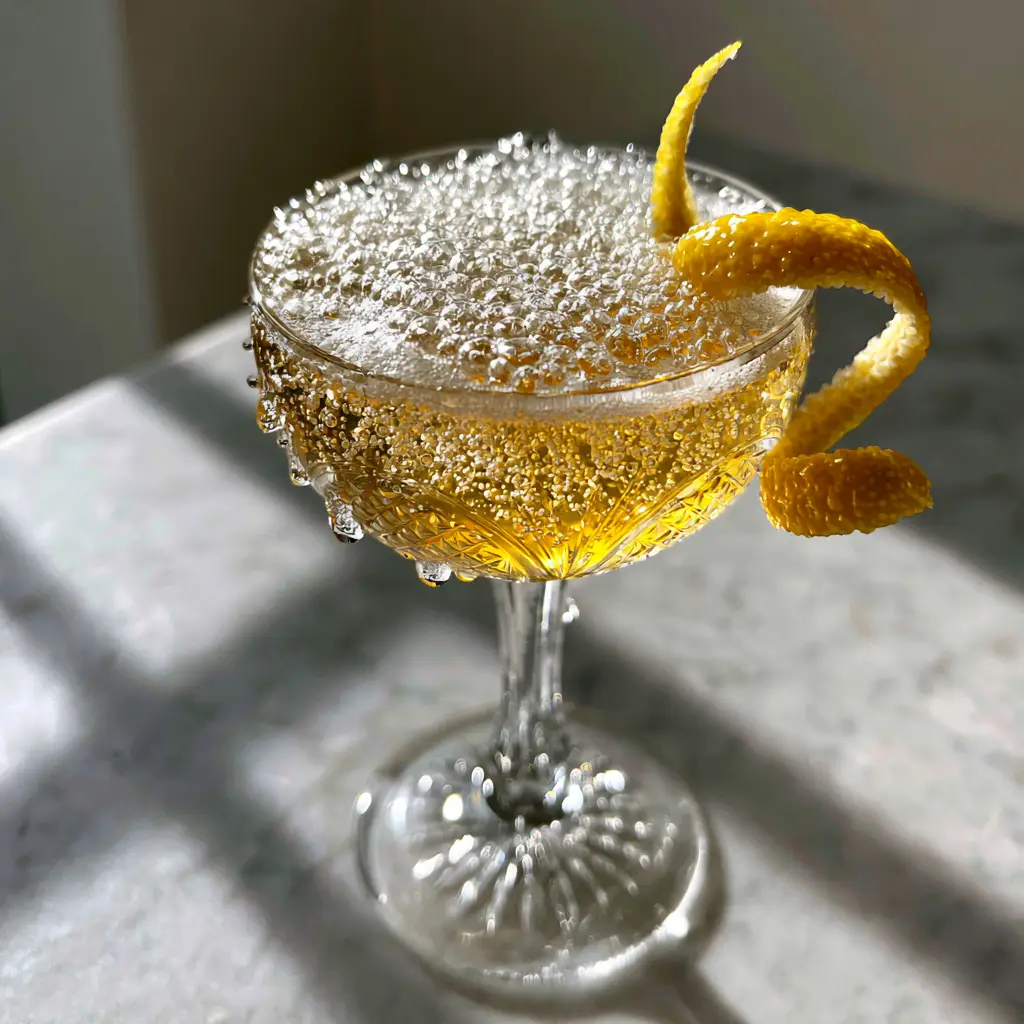
Achieving the perfect French 75 cocktail requires a forensic attention to detail, from the micro condensation droplets on the glass to the long, thin spiral of lemon zest that releases fragrant citrus oils with every sip. This guide will walk you through the science of layering and the art of citrus expression to recreate this masterpiece at home.
Why This Sophisticated Sparkling Serve Works
- Dual-Layered Visual Physics: The clear, golden-yellow base of gin and lemon sits beneath a thick crown of carbonated champagne foam, creating a stunning physical contrast.
- Aromatic Citrus Depth: A perfectly spiraled lemon zest twist perches on the rim, providing immediate olfactory pleasure before the first sip even hits your tongue.
- Precision Temperature Control: The use of chilled brut champagne and a pre-chilled crystal glass ensures the micro condensation droplets form instantly, signaling a perfectly cold drink.
- Balanced Botanical Profile: The London Dry Gin provides a structured spine that prevents the champagne from becoming overly sweet or one-dimensional.
The Essential Elements for an Authentic French 75 Cocktail
To achieve the specific visual and flavor profile described in our blueprint, every ingredient must be selected for its physical properties as much as its taste. We aren’t just mixing; we are constructing a layered masterpiece.
London Dry Gin: 1.5 oz (45ml). This style of gin is crucial because its heavy juniper profile and dry finish provide the necessary structural “kick” to stand up against the acidic lemon juice.
Freshly Squeezed Lemon Juice: 0.5 oz (15ml). You must use fresh lemons; bottled juice lacks the vibrant enzymes and brightness required to create that distinct clear, golden-yellow base layer.
Clear Simple Syrup: 0.5 oz (15ml). A 1:1 ratio of sugar to water provides the viscosity needed for the layering effect while softening the sharp edges of the gin and citrus. If you enjoy experimenting with different flavor profiles, you might find inspiration in our wide variety of freshly squeezed citrus techniques.
Chilled Brut Champagne: 3 oz (90ml). The “Brut” classification is essential for its low sugar content, which allows the bubbles to remain tight and vigorous, forming that thick layer of rising carbonated foam.
Foundational Ice: 1 cup (approx. 200g). While not in the final glass, large, clear ice cubes are required for the shaking process to achieve maximum aeration and chilling without excessive dilution.
Precision Tools for the Home Mixologist
To replicate the Parisian cafe aesthetic, your equipment must be as refined as your ingredients. The right tools ensure the delicate textures of the French 75 cocktail are preserved.
You will need a professional cobbler or Boston shaker to properly aerate the gin and lemon base. A fine-mesh Hawthorne strainer is also vital to ensure no pulp or ice shards disrupt the clarity of the golden-yellow bottom layer.
The most important visual element is the vintage etched crystal coupe glass. The etchings provide “nucleation points” for the champagne bubbles, helping to maintain the thick foam head. Finally, a dedicated channel knife is required to create that long, thin, perfectly spiraled lemon zest twist.
Architecting the Pour: A Step-by-Step Guide
1. The Thermal Foundation
Place your vintage etched crystal coupe glass in the freezer for at least 15 minutes. This is the secret to achieving those “micro condensation droplets” mentioned in our visual blueprint; the temperature differential between the cold glass and the ambient air is what creates that frosty, inviting texture.
2. Preparing the Aromatic Garnish
Using a channel knife, cut a long, continuous spiral from a fresh, thick-skinned lemon. Aim for a length of at least 4 inches (10cm). Twist the peel tightly over the empty glass to express the citrus oils, then set it aside. This ensures the oils coat the etchings of the crystal.
3. Shaking the Golden Base
Combine the 1.5 oz (45ml) of London Dry Gin, 0.5 oz (15ml) of lemon juice, and 0.5 oz (15ml) of simple syrup in your shaker. Fill with ice and shake vigorously for exactly 12 seconds. You are looking for the shaker to become painfully cold to the touch and a light frost to form on the stainless steel.
4. The Precision Strain
Double-strain the mixture into the bottom of your chilled coupe. It should fill roughly one-third of the glass, appearing as a clear, golden-yellow liquid. This density is what allows the next layer to sit perfectly on top.
5. The Champagne Crown
Slowly pour the 3 oz (90ml) of chilled brut champagne into the glass. To achieve the “two distinct physical layers” and the “thick layer of carbonated foam,” pour the champagne over the back of a bar spoon. Watch as the bubbles rise to the surface, creating a frothy, white head against the golden base.
6. The Final Flourish
Perch the long lemon zest twist on the rim of the glass. The spiral should hold its shape, showcasing the glistening oils on its surface. Serve immediately while the sunlight casts those gentle shadows across your marble surface.
Pro Tips for a Flawless Execution
- The Bubble Test: If your champagne foam disappears too quickly, your glass might not be clean enough. Any residual soap or oils will pop the bubbles instantly. Always hand-wash your crystal with warm water only.
- Sugar Density: If your layers are mixing too quickly, your simple syrup might be too thin. Ensure a true 1:1 ratio by weight to give the base layer enough “heaviness” to stay submerged.
- Citrus Temperature: Always juice your lemons at room temperature to get the maximum yield, but chill the juice before adding it to the shaker to keep the ice from melting too fast.
- Gin Selection: Avoid “Old Tom” or “sloe” gins for this specific recipe, as they will cloud the clear golden-yellow visual we are striving for.
Serving Suggestions and Savory Pairings
The high acidity and effervescence of the French 75 cocktail make it a superb palate cleanser. It pairs beautifully with rich, savory appetizers that can stand up to the botanical punch of the gin.
For a sophisticated evening, serve this cocktail alongside savory cheesesteak garlic bread or perhaps some elegant herb-infused mushroom shells. The bubbles cut through the fat of the cheese, while the lemon highlights the earthy notes of the mushrooms.
If you are hosting a brunch, consider following this drink with a lighter course like spiced apple oats to balance the morning’s indulgence. For those with a sweet tooth, the crispness of the champagne is a delightful contrast to homemade chocolate chip cookies.
Common Questions About the French 75
While you can, Prosecco is often sweeter and has larger, less persistent bubbles. For the specific visual of a ‘thick layer of carbonated foam’ and the dry flavor profile, a Brut Champagne is superior.
Ensure the twist is long (at least 4 inches) and wound tightly into a spiral. The tension of the citrus peel will help it ‘perch’ on the rim of the crystal glass.
While often served in a flute, a vintage etched crystal coupe is the preferred choice for a Parisian aesthetic, as it allows more room for the aromatic lemon oils and the thick foam layer.
The layers occur because the gin-lemon-syrup base is denser than the champagne. By pouring the champagne slowly over a spoon, it sits on top, creating a beautiful visual gradient.
It is named after the French 75mm field gun used in WWI, noted for its speed and power. The cocktail was said to have a similar ‘kick’.
The Authentic French 75 Recipe Card
French 75 Cocktail: The Ultimate Guide to the Perfect Parisian Pour
Ingredients
Equipment
Method
- Place the etched crystal coupe in the freezer for 15 minutes to ensure micro condensation droplets form.
- Use a channel knife to cut a long, thin spiral of lemon zest; twist over the glass to release oils.
- Combine gin, lemon juice, and syrup in a shaker with ice. Shake for 12 seconds until the exterior is frosted.
- Double-strain the golden-yellow mixture into the bottom of the chilled coupe.
- Slowly pour the chilled brut champagne over the back of a bar spoon to create two distinct layers and a thick foam head.
- Perch the lemon zest spiral on the rim and serve immediately.
Notes
Ensure champagne is extremely cold to maintain the carbonated foam layer.
Closing Thoughts on this Parisian Classic
The French 75 cocktail is a testament to the fact that simple ingredients, when handled with forensic precision, can create something truly extraordinary. Whether you are enjoying it on a light-grey marble surface in the morning sun or as a pre-dinner celebratory toast, its layers of flavor and texture never fail to impress.
We invite you to try this recipe and share your results. Did you manage to get that perfect thick foam layer? Let us know in the comments below! Don’t forget to follow us and save this recipe to your boards on Pinterest for your next cocktail hour.