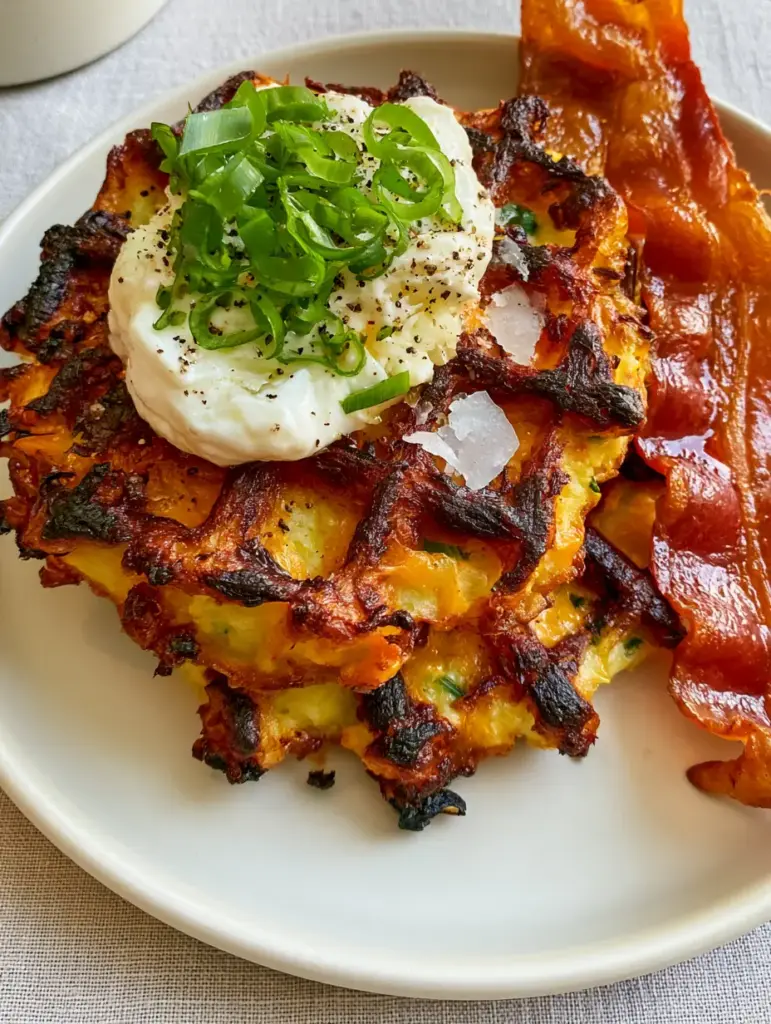
There is a specific culinary magic that happens when the humble mashed potato meets the intense, rhythmic heat of a waffle iron. This potato waffle recipe isn’t just a clever way to use up leftovers; it is a masterclass in textural contrast, featuring deep, dark golden-brown charred edges and a pillowy, savory center flecked with melted sharp cheddar threads.
Imagine a crisp morning where the soft, diffused light hits a matte white ceramic plate, illuminating a stack of ultra-crispy waffles. The heat from the potato base begins to gently melt a thick, cold dollop of sour cream, while the vibrant green of fresh scallions and the shimmer of flaky sea salt catch the eye.
Whether you are looking for a show-stopping brunch or a unique side dish, these waffles deliver a craggy, crunchy texture that traditional batter simply cannot replicate. By incorporating professional techniques to manage moisture and starch, we ensure every bite provides that satisfying “crunch” followed by the rich, umami depth of sharp cheese and smoky bacon.
Why This Savory Waffle Will Change Your Breakfast Routine
- Unrivaled Texture: The combination of mashed potato starch and high-heat searing creates a “shatter-crisp” exterior with charred, caramelized edges.
- Deep Flavor Profile: We infuse the batter with sharp cheddar and fresh chives, ensuring every bite is seasoned from the inside out.
- Visual Sophistication: Garnished with wavy bacon strips and a pillowy sour cream dollop, this dish looks like it came straight from a professional food photography set.
- Kitchen Efficiency: This recipe is the ultimate solution for transforming yesterday’s mashed potatoes into a gourmet masterpiece.
Essential Components for the Ultimate Potato Waffle Recipe
To achieve the forensic visual accuracy of a professional chef, we must balance foundational ingredients with high-impact flavor agents. Each component serves a specific scientific purpose in the structure and taste of the waffle.
Leftover Mashed Potatoes: 2 cups (450g). The potatoes provide the starchy foundation; for the best results, ensure they are chilled and relatively stiff rather than runny.
Sharp Cheddar Cheese: 1 cup (115g), freshly shredded. Using a block of sharp cheddar and grating it yourself ensures the cheese “threads” melt perfectly into the waffle ridges without the grainy texture of pre-shredded varieties.
All-Purpose Flour: 1/2 cup (60g). A small amount of flour acts as the “glue,” providing the structural integrity needed to flip the waffle without it falling apart.
Large Eggs: 2 units. The proteins in the eggs coagulate during the cooking process, binding the heavy potato mash into a light, airy framework.
Fresh Chives: 3 tbsp (12g), finely chopped. These are folded directly into the batter to provide those characteristic green flecks visible in the final charred crust.
Baking Powder: 1 tsp (5g). This invisible hero provides just enough lift to ensure the waffles aren’t overly dense, creating tiny air pockets that catch the melted cheese.
Melted Unsalted Butter: 3 tbsp (42g). Fat is the conductor of heat; the butter helps the potato starch undergo the Maillard reaction, leading to that dark golden-brown color.
Crispy Bacon Strips: 4-6 strips. Choose a thick-cut variety to achieve the “glistening, wavy” appearance described in our visual blueprint.
Sour Cream: 1/2 cup (120g). Keep this strictly cold until the moment of serving to create the necessary temperature contrast against the hot waffle.
Garnishments: Freshly sliced green onions, cracked black pepper, and large flakes of sea salt. These provide the final textural notes and vibrant color contrast against the neutral plate.
Professional Tools for a Crispy Crust
Achieving the perfect potato waffle recipe requires more than just ingredients; it requires the right thermal environment. A high-quality, non-stick Belgian waffle iron is preferred for its deep ridges, which maximize the surface area for crisping.
You will also need a wire cooling rack. Placing the waffles directly onto a plate can cause steam to build up underneath, softening the crust you worked so hard to achieve. For the bacon, a large cast-iron skillet is ideal for rendering the fat and achieving that wavy, crispy finish.

Mastering the Batter: A Step-by-Step Guide
Preparing the Savory Base
In a large mixing bowl, combine your chilled mashed potatoes with the beaten eggs and melted butter. Use a stiff spatula to fold them together until the mixture is cohesive but still retains some of the potato’s natural texture.
Whisk together the flour and baking powder in a separate small bowl before folding them into the potato mixture. This ensures the leavening agent is evenly distributed, preventing any “salty” pockets and ensuring a uniform rise across the waffle iron.
Folding in the Flavor Threads
Gently fold in the shredded sharp cheddar and the finely chopped chives. You want to see distinct “threads” of cheese and green flecks of chive throughout the batter; do not over-mix, or the cheese will blend too thoroughly and lose its visual impact.
Season the batter with a pinch of salt and black pepper, keeping in mind that the bacon and sea salt garnish will add significant sodium later. If you are serving this alongside high-protein dinners, you might even consider adding a pinch of smoked paprika for extra depth.
The Searing Process
Preheat your waffle iron to its highest setting. A common mistake is using medium heat, which “bakes” the potato rather than searing it. We want that deep, dark golden-brown charred edge that defines a gourmet potato waffle.
Grease the iron liberally with cooking spray or brushed oil, even if it is non-stick. Place a generous scoop of the potato mixture into the center and close the lid. Resist the urge to peek for at least 5 to 7 minutes. The potato needs time to form a structural crust before it can be moved.
Rendering the Perfect Bacon
While the waffles are searing, lay your bacon strips in a cold skillet. Turn the heat to medium and cook, turning occasionally, until the fat has rendered and the strips are wavy and glistening. If you enjoy bold flavors, you could serve these waffles alongside savory ranch mushrooms for a complete breakfast spread.
Expert Tips for Forensic Visual Success
- Cold Sour Cream is Key: To achieve the “pillowy dollop” look, use full-fat sour cream straight from the refrigerator. Low-fat versions tend to be too runny and will melt instantly upon contact.
- The “No-Peek” Rule: Opening the waffle iron too early is the number one cause of potato waffles falling apart. Wait for the steam to mostly subside before checking for doneness.
- Managing Moisture: If your mashed potatoes were particularly creamy (lots of milk or cream), add an extra tablespoon of flour to the batter to ensure it holds its shape.
- The “Wavy” Bacon Trick: To get that professional “wavy” look, don’t press the bacon flat with a weight. Let it curl naturally in the pan as the proteins tighten.
How to Store and Reheat Your Waffles
If you have leftover waffles, they store remarkably well. Allow them to cool completely on a wire rack to prevent sogginess, then place them in an airtight container in the refrigerator for up to 3 days.
To reheat and reclaim that “ultra-crispy” texture, avoid the microwave at all costs. Instead, pop them back into a hot waffle iron for 2 minutes or toast them in a standard toaster oven until the cheese threads begin to sizzle again. This makes them a great companion to fresh cucumber salads for a light lunch the next day.
Creative Pairings and Serving Suggestions
This potato waffle recipe is incredibly versatile. For a hearty brunch, serve it exactly as described with bacon and sour cream. If you are looking for a dinner application, these waffles act as a fantastic base for creamy savory sauces or even pulled pork.
For a lighter, spring-inspired meal, consider pairing the waffles with a side of steamed asparagus or a poached egg. The runny yolk combined with the sharp cheddar and charred potato creates a luxurious sauce that ties the whole plate together.
Frequently Asked Questions
This specific recipe uses all-purpose flour for structure, but you can easily substitute it with a 1:1 gluten-free flour blend or even potato starch to make them gluten-free.
Yes, but you must mash them first and let them cool completely. Fresh, hot potatoes contain too much steam, which will make the waffles soggy and prevent the charred edges from forming.
Use a high heat setting but ensure your batter has enough fat (butter and cheese). The fat facilitates the Maillard reaction, allowing the exterior to crisp and char quickly while the inside remains tender.
This usually happens if the iron wasn’t hot enough or if the waffle wasn’t cooked long enough. Potato starch needs a full 5-7 minutes at high heat to release cleanly from the non-stick surface.
The Ultimate Crispy Potato Waffle Recipe


Potato Waffle Recipe with Sharp Cheddar and Crispy Bacon
Ingredients
Equipment
Method
- In a large bowl, combine 2 cups (450g) chilled mashed potatoes with 2 beaten eggs and 3 tbsp (42g) melted butter until cohesive.
- Fold in 1/2 cup (60g) flour and 1 tsp (5g) baking powder until just combined.
- Gently fold in 1 cup (115g) shredded cheddar and 3 tbsp (12g) chopped chives, ensuring cheese threads are visible.
- Preheat waffle iron to high. Grease liberally. Scoop batter into the center and close.
- Cook for 5-7 minutes until the exterior shows dark golden-brown charred edges and a firm crust.
- Cook bacon in a skillet until wavy and crispy. Drain on paper towels.
- Stack waffles on a matte white plate. Add a thick dollop of cold sour cream. Top with scallions, cracked pepper, flaky salt, and bacon strips.
Notes
Use cold, stiff mashed potatoes for the best structural integrity.
Start Your Morning with a Crunch
There is nothing quite like the sensory experience of breaking through the charred crust of a perfectly made potato waffle. The combination of the hot, savory base and the cold, tangy sour cream is a culinary classic for a reason. We hope this potato waffle recipe becomes a staple in your home kitchen, bringing a touch of gourmet flair to your breakfast table.
If you enjoyed this recipe, please leave a comment below and let us know how your charred edges turned out! Don’t forget to share your beautiful creations on Pinterest and tag us. Happy cooking!