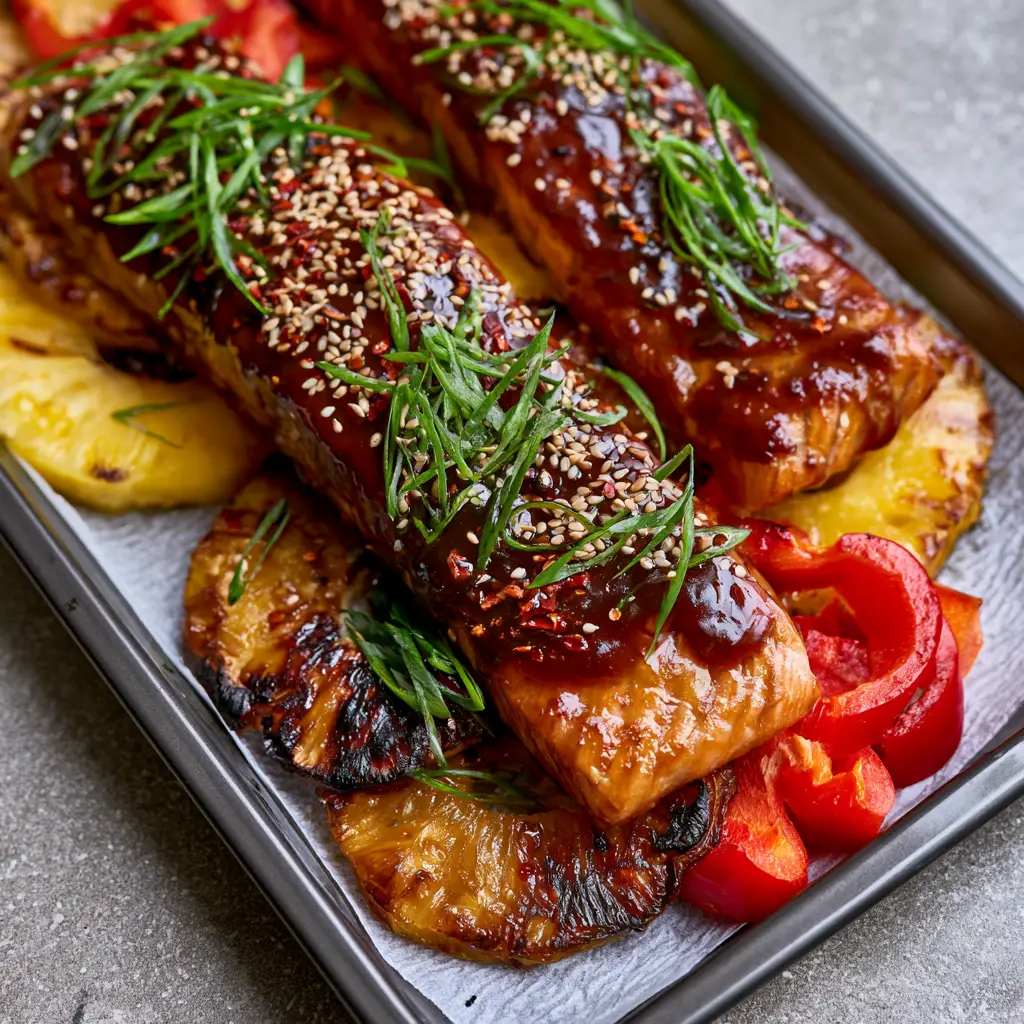
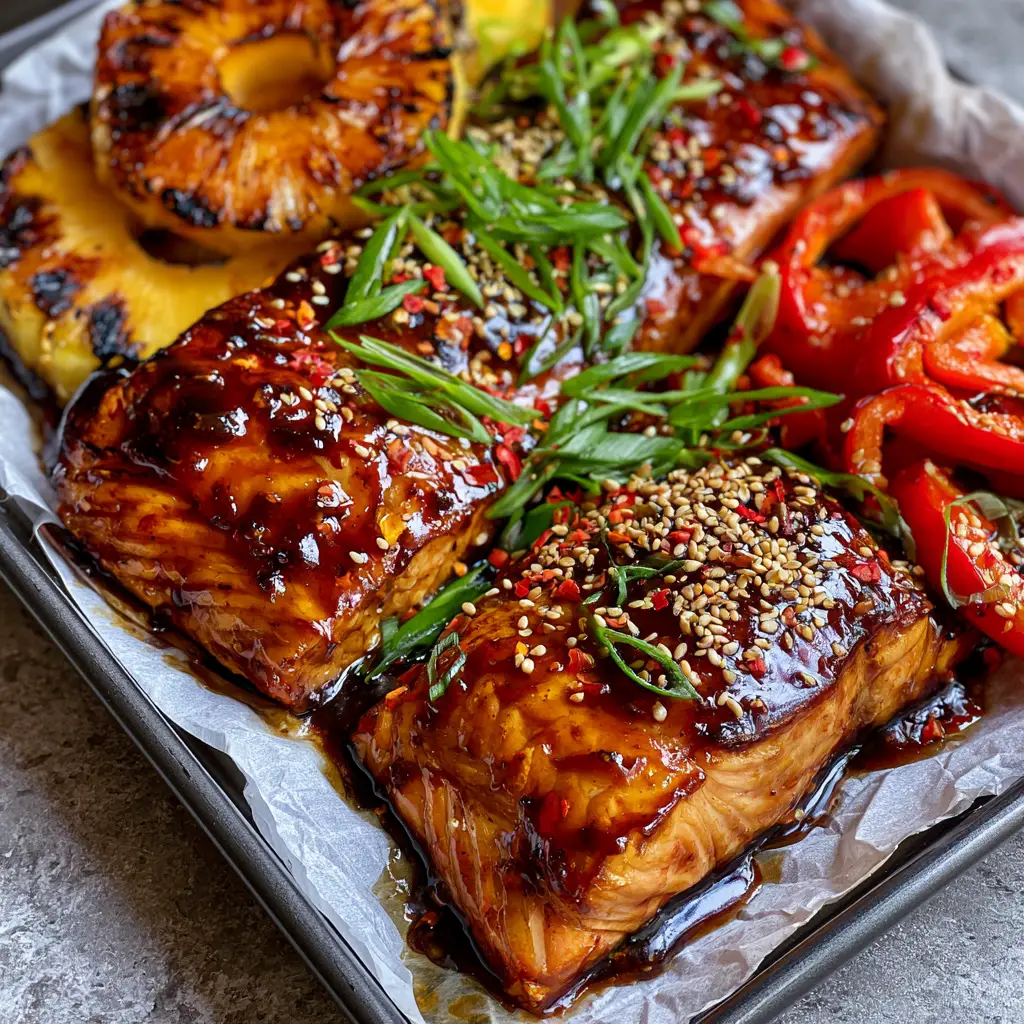
There is a specific visual magic that happens when a Baked Pineapple Salmon hits the table, shimmering under the light with a dark amber glaze that looks almost like polished glass. This isn’t just another seafood dish; it is a masterclass in the balance of salt, sugar, and acidity, designed to evoke the feeling of a high-end tropical bistro right in your own kitchen.
Every element of this recipe is calibrated to deliver an “extreme close-up” level of perfection. We are talking about thick, succulent Atlantic salmon fillets that flake at the mere suggestion of a fork, paired with pineapple rings that have been charred until their edges are a deep, caramelized brown. The vibrant red bell peppers provide a crunch that cuts through the rich, fatty omega-3s of the fish.
Whether you are looking for a show-stopping weeknight meal or a centerpiece for your next gathering, this dish delivers on every sensory front. From the scent of toasted sesame oil wafting through the house to the sight of those bright green, bias-cut scallions against the dark metal of the sheet pan, your dinner guests will be reaching for their phones to snap a photo before the first bite.
Why This Baked Pineapple Salmon Recipe Wins Every Time
- The “Glistening” Factor: Our double-reduction teriyaki glaze creates a heavy, dark amber coating that reflects light and clings to the salmon without running off.
- Textural Contrast: You get the flaky softness of perfectly cooked salmon, the snap of caramelized peppers, and the juicy, fibrous bite of charred pineapple.
- Pro-Level Finishing: We utilize toasted white sesame seeds and sharp red chili flakes to provide a sophisticated garnish that isn’t just for show—it adds layers of heat and earthiness.
- Efficient Clean-up: By using a sheet pan lined with textured white parchment paper, you maximize heat distribution while minimizing the time spent at the sink.
- Nutrient Dense: This recipe fits perfectly into a rotation of high-protein dinners that don’t sacrifice flavor for health.
Essential Components for the Perfect Amber Glaze
To achieve the visual result seen in professional food photography, we cannot rely on thin, store-bought sauces. We need a glaze that has body and “stick.”
Atlantic Salmon Fillets: Choose thick-cut fillets (about 6 oz (170g) each) with visible marbling. The thickness is crucial so the outside can caramelize without the inside overcooking.
Fresh Pineapple Rings: While canned works in a pinch, fresh pineapple has a higher sugar content that leads to those beautiful charred, caramelized brown edges we are looking for.
Dark Soy Sauce & Pineapple Juice: This combination forms the base of our “heavy glaze.” The dark soy provides the deep color, while the juice adds the necessary acidity to break down the proteins slightly.
Brown Sugar & Honey: We use both to ensure a complex sweetness. The honey provides the “gloss” while the brown sugar helps with the “char.”
Cornstarch Slurry: 1 tbsp (8g) of cornstarch mixed with 1 tbsp (15ml) of cold water is the “invisible” ingredient that turns a thin sauce into a thick, reflective coating.
Aromatic Base: Freshly grated ginger and minced garlic provide the savory backbone that prevents the dish from being overly sweet.
Tools Required for Culinary Success
To replicate the “handheld smartphone photo” aesthetic, you need the right gear. A dark metal sheet pan is preferred because it absorbs more heat, helping to caramelize the bottom of the peppers and pineapple.
Textured white parchment paper is another secret weapon. It prevents the sugars in the pineapple glaze from sticking to the pan and burning, and it provides a beautiful, clean contrast for the dark amber salmon.
A high-heat pastry brush is essential for “painting” the glaze onto the salmon fillets. This ensures even coverage and that “heavy” look described in our visual blueprint.
Mastering the Sear: Step-by-Step Instructions
Preparation and the Glaze Reduction
Preheat your oven to 400°F (200°C). While the oven heats, combine 1/2 cup (120ml) pineapple juice, 1/3 cup (80ml) soy sauce, 1/4 cup (50g) brown sugar, and your aromatics in a small saucepan.
Simmer the mixture over medium heat until it reduces by a third. Whisk in your cornstarch slurry and continue to cook for 2 minutes until the sauce is thick enough to coat the back of a spoon—this is your “liquid gold.”
Caramelizing the Fruit and Vegetables
On your parchment-lined sheet pan, toss the fresh pineapple rings and red bell pepper strips with 1 tbsp (15ml) of neutral oil and a pinch of salt. Arrange them in a single layer, leaving space in the center for the salmon.
Roast the pineapple and peppers for 8-10 minutes before adding the fish. This “head start” ensures the pineapple achieves those charred brown edges without overcooking the salmon.
The Perfect Salmon Roast
Pat your salmon fillets bone-dry with a paper towel. Season lightly with salt and pepper. Place the fillets onto the hot sheet pan.
Generously brush the salmon with a thick layer of the glaze. Bake for another 10-12 minutes. For the final 2 minutes, switch to the broiler setting to create that “glistening, dark amber” finish that reflects the light.
The Final Garnish Flourish
Remove the pan from the oven. Immediately apply a second “maintenance coat” of glaze to the salmon for maximum shine. This is a trick used by food stylists to make the dish look incredibly succulent.
Sprinkle a dense layer of toasted white sesame seeds over the fillets. Add your bias-cut green onions—aim for very thin slices to provide that professional look. Finally, scatter a few red chili flakes for a pop of color and heat.
Expert Tips for High-Definition Flavor
- Room Temperature Fish: Take your salmon out of the fridge 15 minutes before cooking. This ensures the center cooks evenly with the exterior.
- The Dry-Pat Method: Moisture is the enemy of a good sear. Drying the skin and top of the salmon allows the glaze to adhere rather than sliding off.
- Watch the Sugar: Because the glaze is high in sugar, keep a close eye during the broiling stage. It can go from “perfectly charred” to “burnt” in 30 seconds.
- Acid Balance: If the dish feels too heavy, a squeeze of fresh lime juice over the finished salmon can brighten the entire profile.
How to Store and Reheat Your Leftovers
If you have extra Baked Pineapple Salmon, store it in an airtight container for up to 2 days. To maintain the texture, avoid the microwave if possible.
Reheat the salmon in a 300°F (150°C) oven covered with foil to prevent drying out. The pineapple and peppers can be quickly seared in a pan to regain their caramelized texture.
Cold leftover salmon is also incredible when flaked over a chickpea and spinach salad for a high-protein lunch the next day.
What to Pair With This Tropical Delight
Because this dish has such bold flavors, you want sides that can soak up that extra pineapple glaze. A bed of jasmine rice or coconut quinoa is the traditional choice.
If you want to keep the meal light and refreshing, consider a side like our cucumber, onion, and tomato salad. The acidity of the tomatoes balances the sweetness of the pineapple perfectly.
For those looking for a different seafood profile, you might also enjoy our Baked Lemon Garlic Butter Salmon, which offers a more citrus-forward experience compared to the deep umami of this teriyaki version.
If you are planning a larger spread of quick Paleo dinner recipes, this salmon fits right in alongside roasted vegetables or a simple cauliflower mash.
Frequently Asked Questions
You can make the glaze up to 3 days in advance. However, for the best visual ‘glisten,’ bake the salmon and apply the glaze fresh.
Yes, but ensure you pat the rings very dry. Canned pineapple has more moisture and won’t char as easily as fresh, but it will still taste delicious in the glaze.
The salmon is done when it reaches an internal temperature of 145°F (63°C) or when it flakes easily with a fork while remaining slightly translucent in the very center.
To make this recipe gluten-free, simply swap the soy sauce for Tamari or coconut aminos. All other ingredients are naturally gluten-free.
The glaze needs to be reduced enough on the stovetop. Ensure you include the cornstarch slurry and simmer until it reaches a syrup-like consistency before brushing it on.
The Complete Baked Pineapple Salmon Recipe
Baked Pineapple Salmon: The Ultimate Glistening Sheet Pan Dinner
Ingredients
Equipment
Method
- Preheat oven to 400°F (200°C) and line a sheet pan with parchment paper.
- Simmer juice, soy, sugar, honey, ginger, and garlic. Add cornstarch slurry and whisk until thick and glossy.
- Toss pineapple and peppers with oil. Roast for 8-10 minutes until edges start to brown.
- Place salmon on pan, brush heavily with glaze, and bake for 10-12 minutes.
- Broil for 2 minutes until glaze is bubbling and dark amber. Apply a final brush of glaze.
- Top with dense sesame seeds, bias-cut scallions, and chili flakes.
Notes
Use fresh pineapple to get the most dramatic charred edges.
Closing Thoughts on This Vibrant Dish
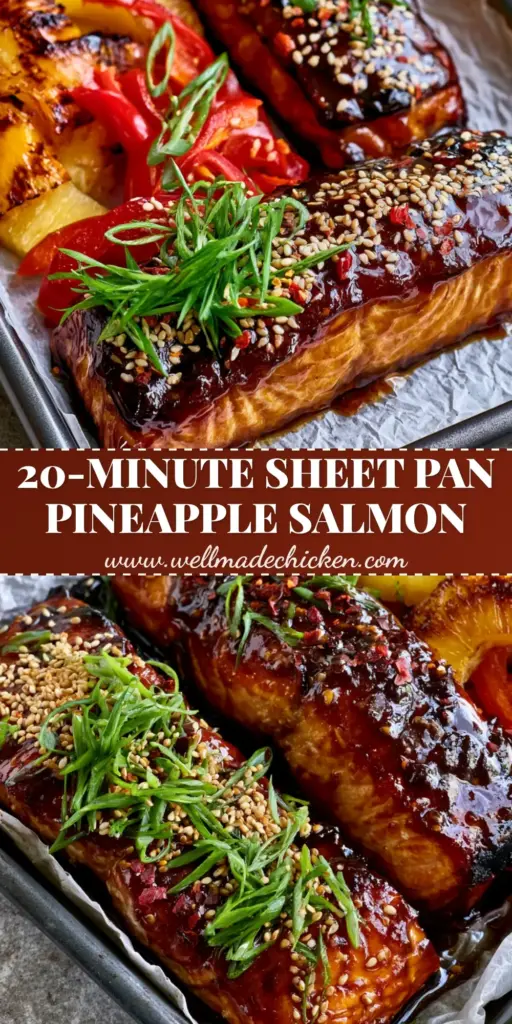
The Baked Pineapple Salmon is more than just a meal; it is a sensory experience that combines the best of tropical sweetness with savory Japanese-inspired flavors. The thick, glistening glaze and the charred fruit create a visual and culinary masterpiece that is surprisingly simple to achieve at home.
If you enjoyed this recipe, please leave a comment below and let us know how your caramelization turned out! Don’t forget to follow us and share your creations on Pinterest to help other home cooks find their next favorite dinner.